Small Backyard Oasis for Kids and Grandkids
A small backyard doesn’t need a redesign to become the place grandkids want to spend every visit. It needs a few smart choices and about one weekend of effort.
Most of what makes an outdoor space work for kids has nothing to do with size. It has to do with shade, water, something to dig in, and a reason to stay outside after the first twenty minutes. Here’s how to set that up without turning your yard into a construction zone.
Shade first, everything else second
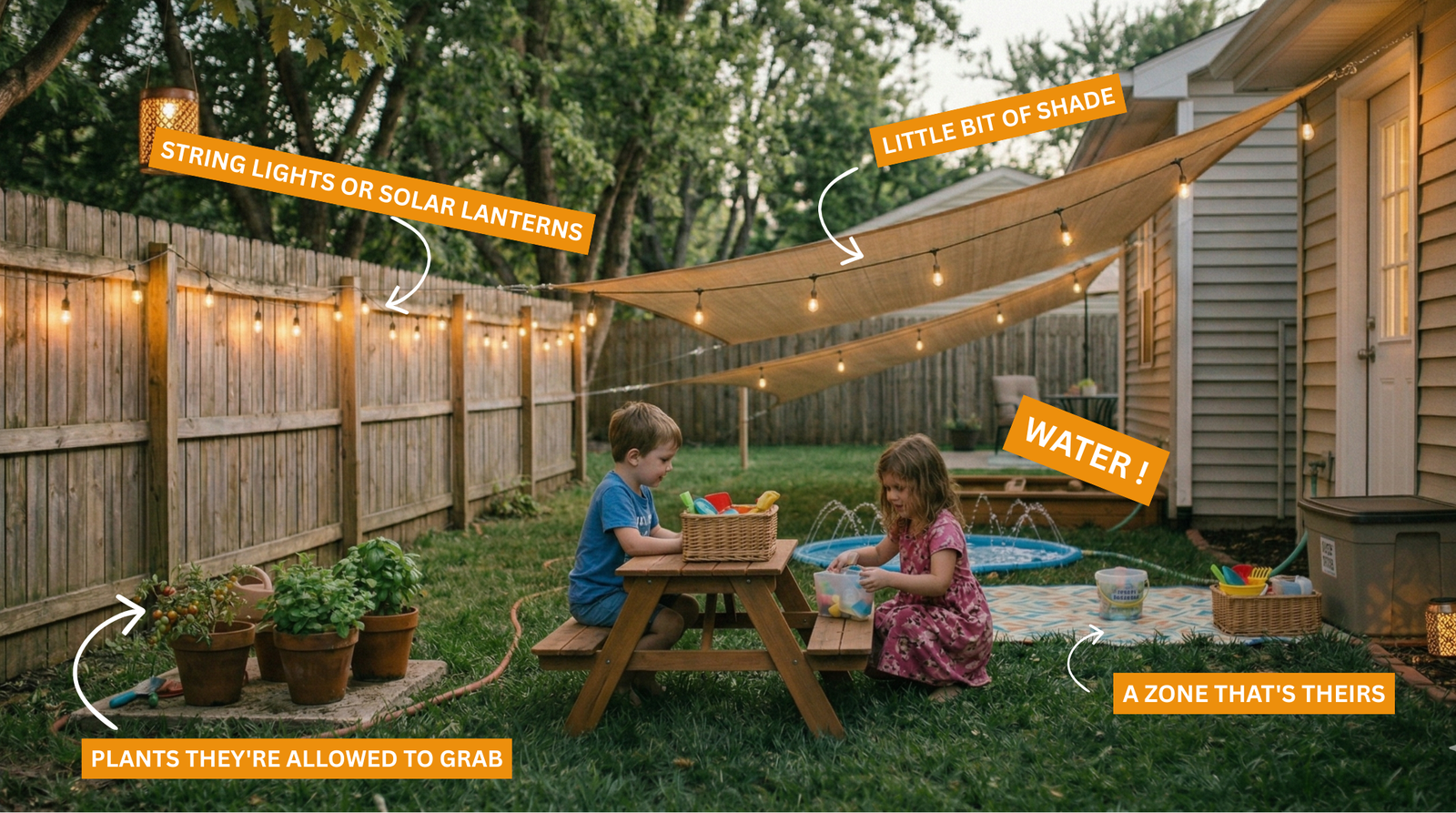
Kids won’t stay in a space that’s too hot, and neither will you. If there’s no mature tree doing the work, a sail shade or large patio umbrella covers a play area for well under a hundred dollars.
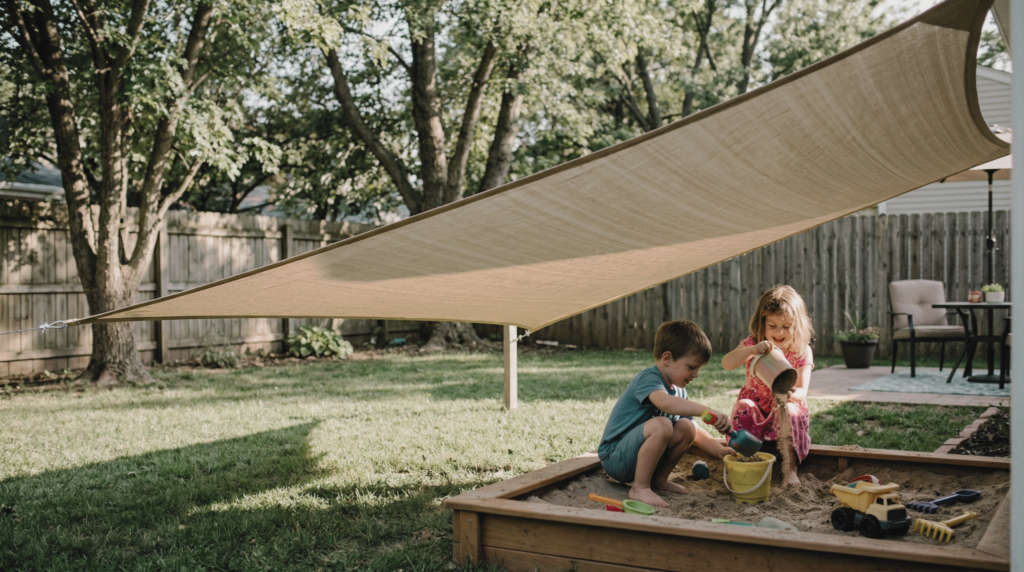
The trick is placement. Watch where the grandkids actually play during one visit — that’s where the shade should go, even if it’s not where it looks most balanced. Function over aesthetics on this one.
Water without the hassle
A plastic tub with cups and funnels will keep a toddler occupied for longer than most toys. For older kids, a basic sprinkler on a timer creates the kind of running-through-water chaos they remember for years.
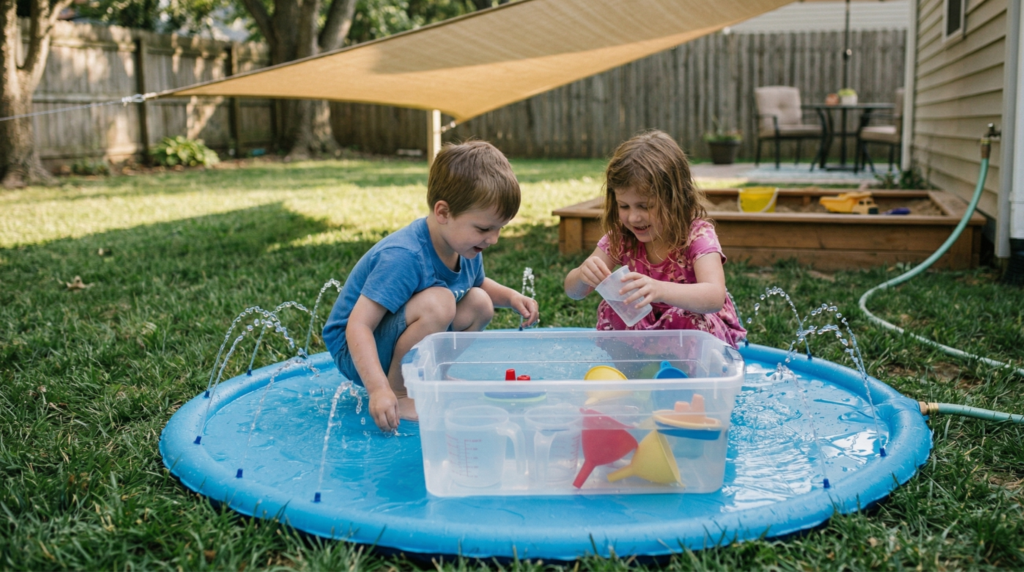
Splash pad mats are another solid option — they roll out flat, connect to a garden hose, and store easily when the grandkids aren’t around. No installation, no permanent footprint.
The goal is water access, not a water feature.
A zone that’s theirs
Small yards work better when kids have a defined area. It doesn’t need to be fenced or built — even a cheap outdoor rug laid on grass creates a boundary a child instinctively understands.
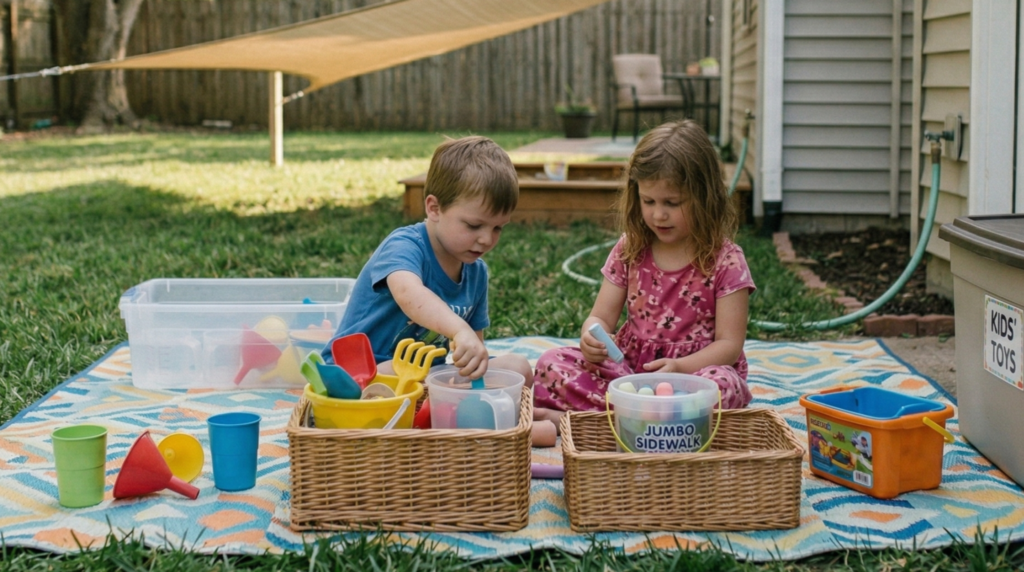
Stock it with things that stay outside: a bucket of sidewalk chalk, a basket of sand toys, a few plastic containers. When grandkids arrive and their corner is already set up, they go straight to it. That’s the whole strategy.
Keeping a dedicated outdoor toy bin by the back door is one of the simplest upgrades a grandparent can make. It takes the setup time to zero.
Plants they’re allowed to grab
A few pots or a small garden bed where grandkids can dig, water, and pick things will hold their attention longer than most store-bought activities.
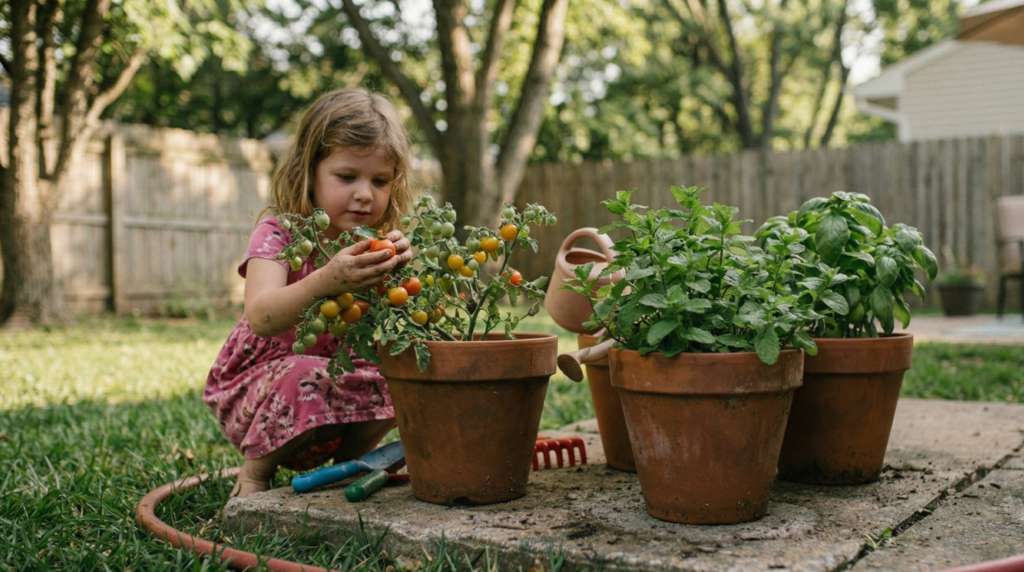
Sunflowers grow fast enough for a child’s patience. Cherry tomatoes give them something to check every visit. Herbs like mint and basil survive rough handling and smell good when grabbed, which they will be.
If the main garden is off-limits, a separate cluster of kid-designated pots works just as well. Three containers on a paving slab is a garden to a four-year-old.
Seating that works across generations
Grandparents need a comfortable chair. Kids need the ground. A low bench or wide step bridges the gap — kids climb on it, use it as a stage, sit on it for snacks. Adults can use it too when they want to be at ground level.
One comfortable chair and open floor space is a better setup than a full patio dining set in a small yard. Anything that takes more than a minute to arrange won’t get used regularly.
Lights after dinner
String lights or solar lanterns change a plain backyard into somewhere kids want to be after 5pm. The effect is immediate and the cost is minimal. Kids treat it like an event. Suddenly they want to eat outside, play outside, stay outside longer.
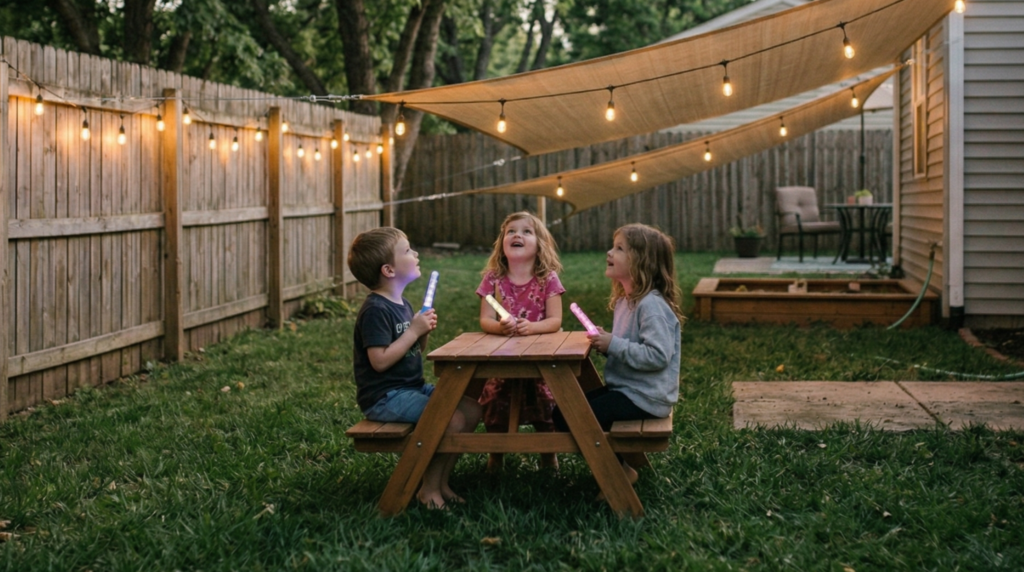
Solar-powered options mean no outlet access needed and no running costs. Drape them along a fence line or hang them from a shade structure and they pull double duty.
What to skip
Full playsets eat up a small yard entirely, and kids lose interest in them faster than expected. A foldable climbing triangle stores against a wall and gives younger grandkids something physical without dominating the space.
Matching outdoor furniture sets, fire pits, elaborate landscaping — none of it is necessary. A small backyard oasis for grandkids comes down to shade, water, a space that feels like theirs, and somewhere comfortable to sit while they figure out the rest.
What’s worked in your yard?
If you’ve turned a small backyard into a space your grandkids love, we’d like to hear what actually gets used — and what turned out to be a waste of money.