How to Plan a Grandma Camp They’ll Never Forget
Somewhere around April, the questions start. “When can we go to grandma’s?” Not if. When. Your grandkids have probably been thinking about summer at your house since the last time they left it.
Grandma camp doesn’t have to be a full week. It can be a long weekend or three days in July. What makes it work is that, for whatever stretch of time you have, your house is their world. Their parents go home which means their usual rules bend just slightly.
If you’ve been thinking about doing this but haven’t quite figured out how to pull it off, here’s what definitely works.
The biggest mistake you can make with grandma camp is over-planning it.
You don’t need a theme or a colour-coded schedule taped to the fridge. You don’t need to buy thirty dollars’ worth of craft supplies from Amazon. Kids — especially kids away from their parents for a few days — need predictability more than entertainment all day, all night.
A loose daily rhythm is everything.
Something active in the morning when energy is high. A slow lunch where nobody rushes. Quiet time in the afternoon — reading, puzzles, maybe a show. Then something fun before dinner, even if “something fun” is just helping you water the garden.
That’s grandma camp!
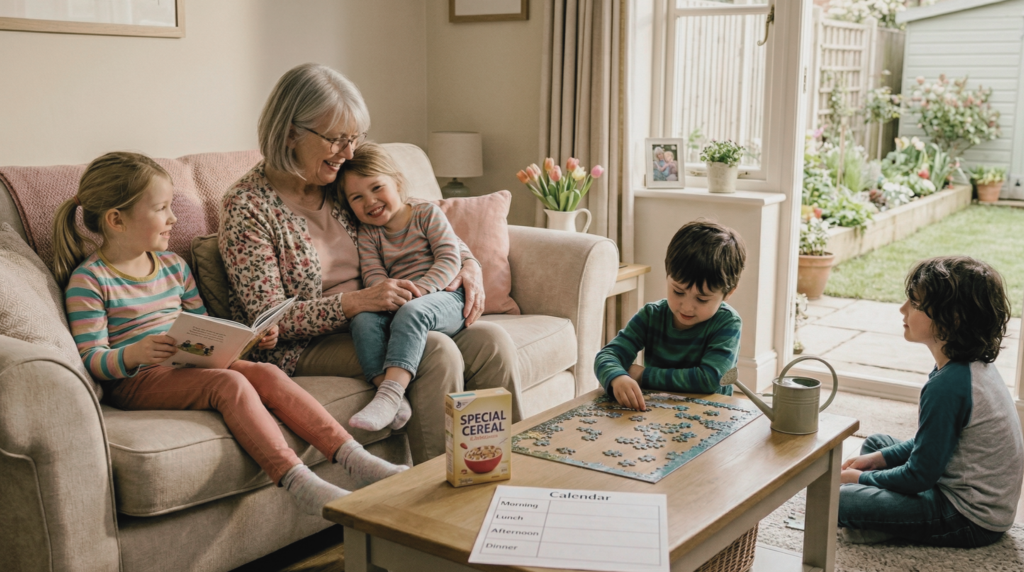
The magic is in the ordinary stuff. The cereal you keep just for them. The spot on the couch that becomes “theirs” by day two. The sound of your house at night, which is different from the sound of their house, and which they’ll remember for longer than any planned activity.
Morning Is for the Good Stuff
Kids wake up ready to go, and your best bet is to meet that energy before it turns into chaos.
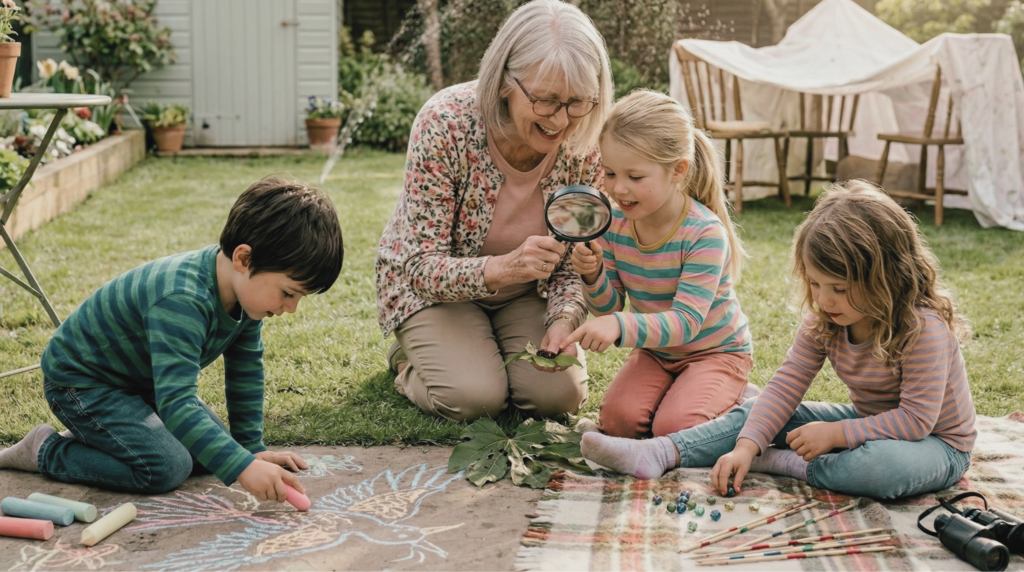
Outside is your friend here. A backyard bug hunt with a magnifying glass. Chalk on the driveway. Birdwatching — which, if you haven’t tried it yet, is one of the best screen-free activities you can do with a grandchild at almost any age. Sprinklers, if you have them. A walk around the neighbourhood where they get to lead.
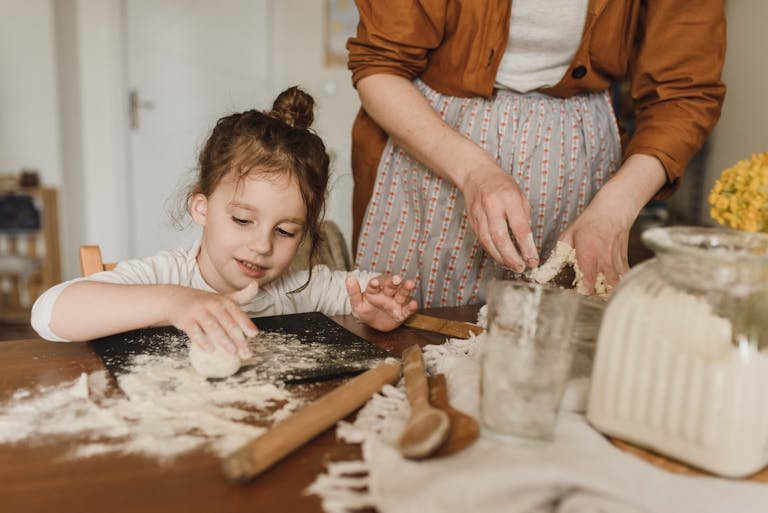
If it’s a rainy day or you’re not up for outside, the indoor activity list is long. Building a fort in the living room will buy you an entire morning. So will baking — though if your style is anything like my father’s, you might want to read this cautionary tale first.
One thing that’s landing with grandkids right now: toys and games from your childhood. Just because they’re genuinely fun. Jacks. Marbles. Cat’s cradle. Pick-up sticks. The stuff that doesn’t need batteries, instructions, or a Wi-Fi connection.
Afternoons Should Be Slow on Purpose
Here’s where most grandparents run out of steam, and that’s completely fine. Afternoons are supposed to be quiet.
Quiet time is how kids learn to be with themselves, and it’s how you survive until bedtime. A puzzle. Colouring books. Audiobooks. Lying on the floor drawing while you read nearby. Kids adapt to the pace of the house they’re in, and if the pace after lunch is calm, they’ll match it faster than you’d expect.
This is also a perfectly good time for a show or a movie. More on that in a minute.
The Screen…
You’re going to use screens at some point during grandma camp. Any grandparent who says otherwise is either lying or exhausted.
What matters isn’t whether screens appear, it’s whether they become the thing the whole day revolves around. If a movie after lunch gives you a break and gives them a rest, that ok. If the tablet comes out because nobody can think of anything else to do and it stays on for four hours, that’s probably not ok.
A reasonable approach: screens are for specific moments, not the background hum. A film in the afternoon, a video call with mum and dad before bed or maybe a round of a game you play together. The rest of the time, the tablet stays in a drawer.
Most kids don’t even ask for screens as much at grandma’s house, because grandma’s house already is the novelty. You are the entertainment. Your garden, your kitchen, your stories, your funny way of doing things — that’s what they came for.
Feed Them Simply, Feed Them Well
Keep breakfast easy — whatever they’ll actually eat without a negotiation. Lunch can be sandwiches, leftovers, whatever is in the fridge. Dinner is where you have one good opportunity to do something together.
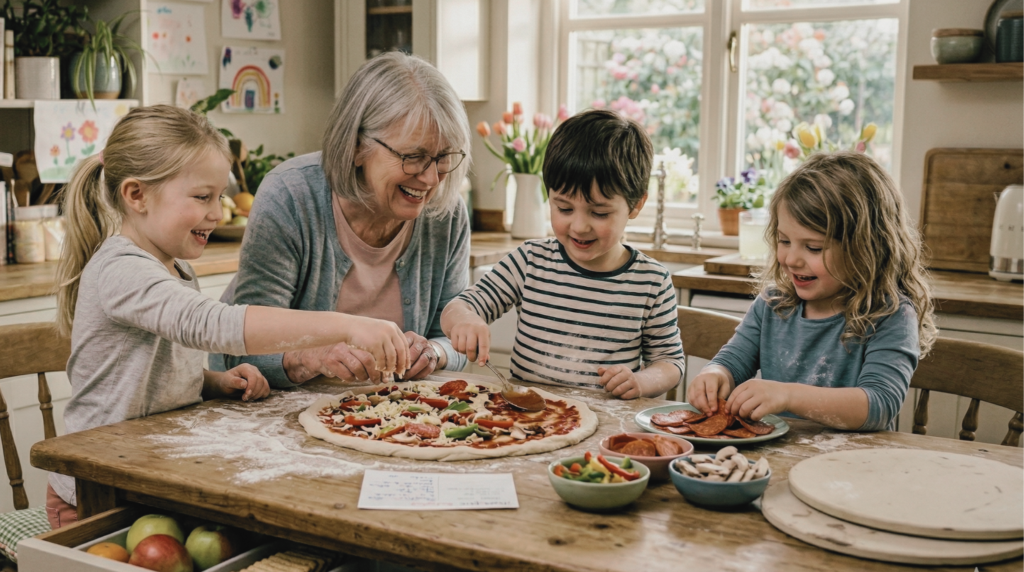
Pick one meal across the whole visit that they help you make from scratch. It doesn’t have to be complicated. Homemade pizza. A big pot of soup. Pancakes for dinner, which grandkids treat as the most thrilling rule-breaking act imaginable.
The snack situation also matters more than you think. A dedicated snack drawer or shelf they can access on their own makes kids feel trusted and keeps them from asking you for food every twenty minutes. Stock it before they arrive. Nothing fancy — crackers, fruit, a few treats.
Sort Out the Non-Negotiables Before They Arrive
One conversation with the parents. Before the grandkids show up.
You need to know: allergies and dietary restrictions (these may have changed since you last asked). Any medications and how to give them. Bedtime — the real bedtime, not the aspirational one. Any fears or anxieties that have cropped up recently. Emergency contacts and insurance details, in case something happens.
One thing worth adding: ask the parents if there’s anything they’d prefer you not do. Not because you need permission to be a grandparent, but because knowing the boundaries in advance means you won’t accidentally step on one mid-week. It keeps the peace, and it keeps the invitations coming.
Make One Thing the Tradition
The temptation is to pack grandma camp with so many special moments that every hour feels like an event. Resist that. Kids don’t remember a packed schedule. They remember the one thing that happened the same way every time.
Whatever it is, do it every time. Not just this summer — every grandma camp from now on. Three years in, they’ll start reminding you that it’s time. That’s when you know it’s stuck.
A Few Things Worth Having on Hand
You don’t need to spend a fortune preparing, but a few things make the week smoother:
A basic first aid kit that’s actually stocked. Band-aids run out fast with kids around.
Sunscreen they’ll tolerate. Whatever their parents use at home is probably your safest bet — ask before buying a new one.
A few towels you don’t care about. Grandma camp is not the week for the good towels.
If you have a pool or plan to be near water — the right pool floats make everything easier and more fun. Kids who might be nervous in the water relax when they’ve got something to hang onto.
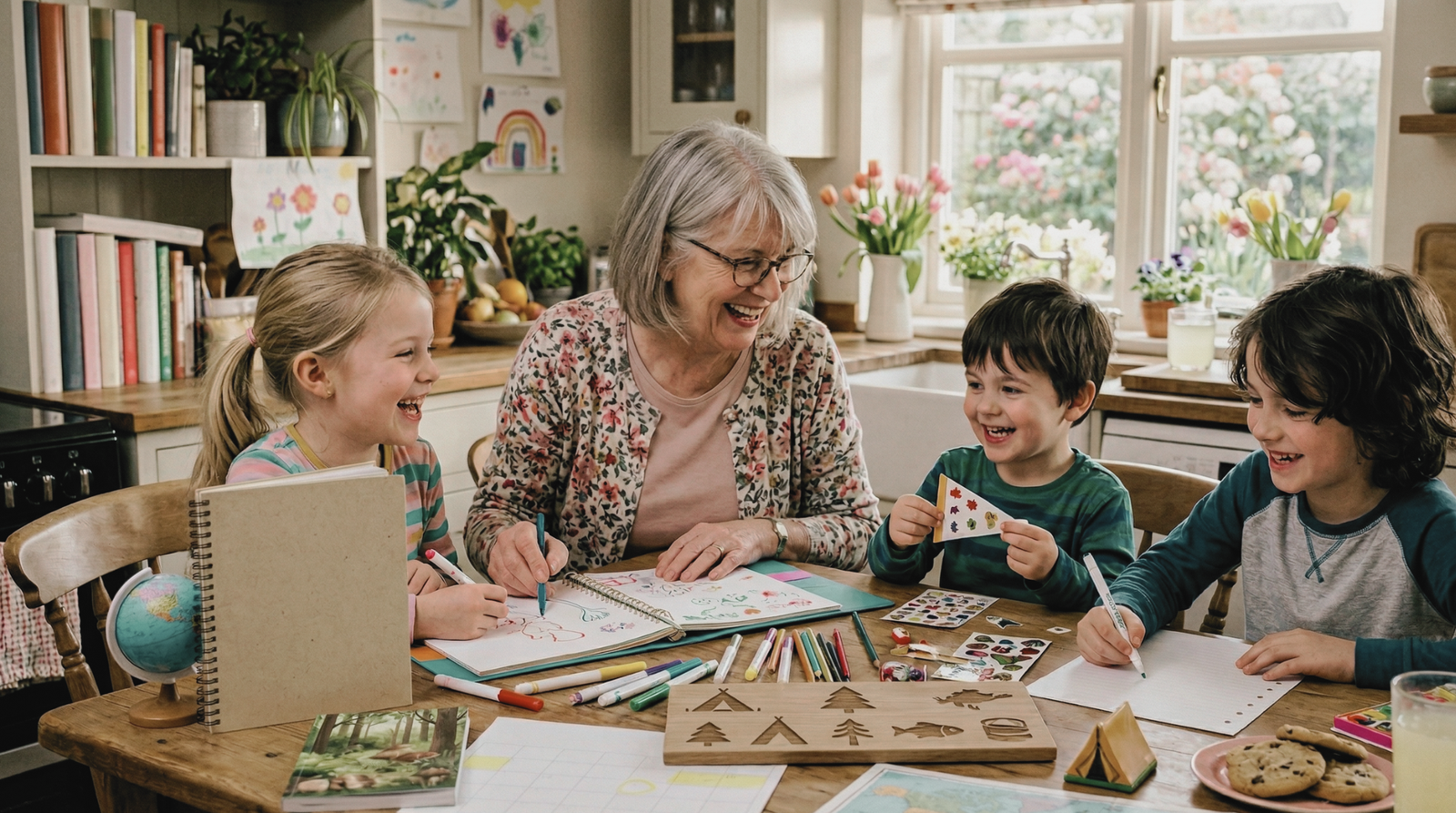
A box of art supplies. Paper, markers, tape, glue sticks, maybe some stickers. Not for a planned craft — just available for when someone says “I’m bored” and you need a five-second answer.
If you have outdoor space, make sure it’s set up for kids before they arrive. Even small changes — a shady spot, a bucket of water toys, something to dig with — make a big difference.
It Doesn’t Have to Be Perfect
The best grandma camps are the ones where the plans fall apart by Tuesday and everyone ends up doing something nobody expected.
The craft flops. The recipe doesn’t work. It rains for two days straight. Someone has a meltdown at 4pm because they miss mum… What your grandkids need from this week isn’t perfection. It’s you, present and unhurried, handling whatever comes up without panic.
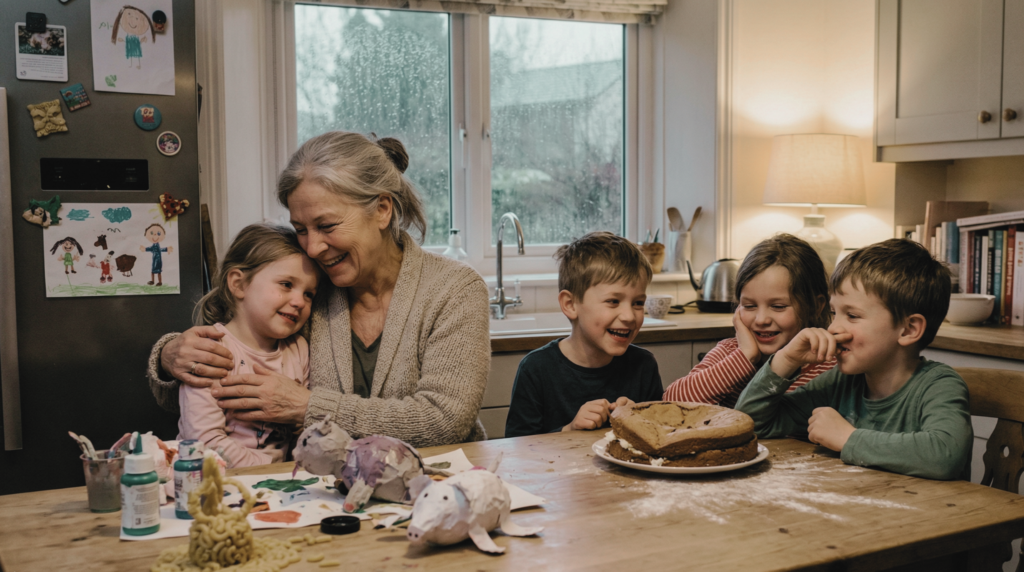
That’s the thing about grandma camp. The bar is lower than you think. Your grandkids aren’t comparing you to a summer programme or a resort. They’re comparing you to home — and the whole point is that your house is different from home. Quieter, or louder, or slower, or weirder. Whatever it is, it’s yours, and that’s exactly what they want.
Over to You
What’s the one thing your grandkids always want to do the second they walk through your door? I’d love to hear what your version of grandma camp looks like — whether it’s a full week or just a Saturday afternoon that turned into a tradition.