A Story of How Not to Bake with Your Grandkids
My dad loves to bake. This is not in question. What is in question is whether baking with my father could truly be called baking together.
Every time we tried, the same thing would happen.
He would do the interesting parts.
I would be handed a task: wash this, fetch that, hold this while I do the actual work. He wasn’t unkind about it. He was just… in charge. Fully, completely, enthusiastically in charge.
I didn’t feel like I was baking. I felt like I was assisting at someone else’s baking. Cheerfully. With snacks involved.
It took me years to understand what was missing, and it’s simple: he never quite grasped that the point of baking with a child is not the baking. It’s the together. He thought the baking was the together. Bless him.
Everything else follows from that.
The Bowl
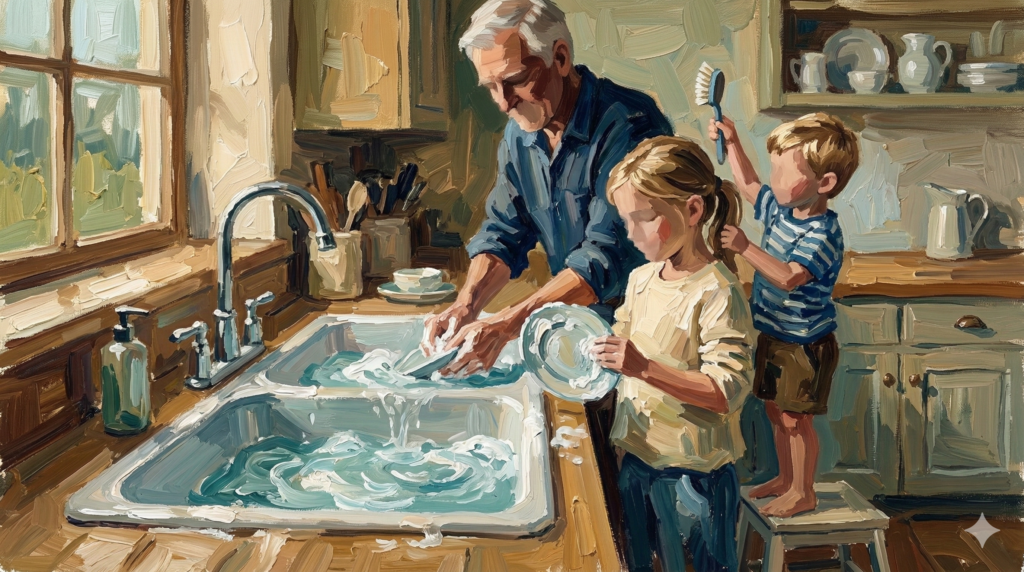
My father’s version: “Ana, wash the bowl.” Before we’d even started. While he got out the ingredients and consulted his recipe and generally prepared to do the thing I thought we were doing together. He said it the way you’d announce good news.
The bowl needed washing, fine.
But handing it to a child and walking away sends a message: you’re the help. You’re here to support me while I do this.
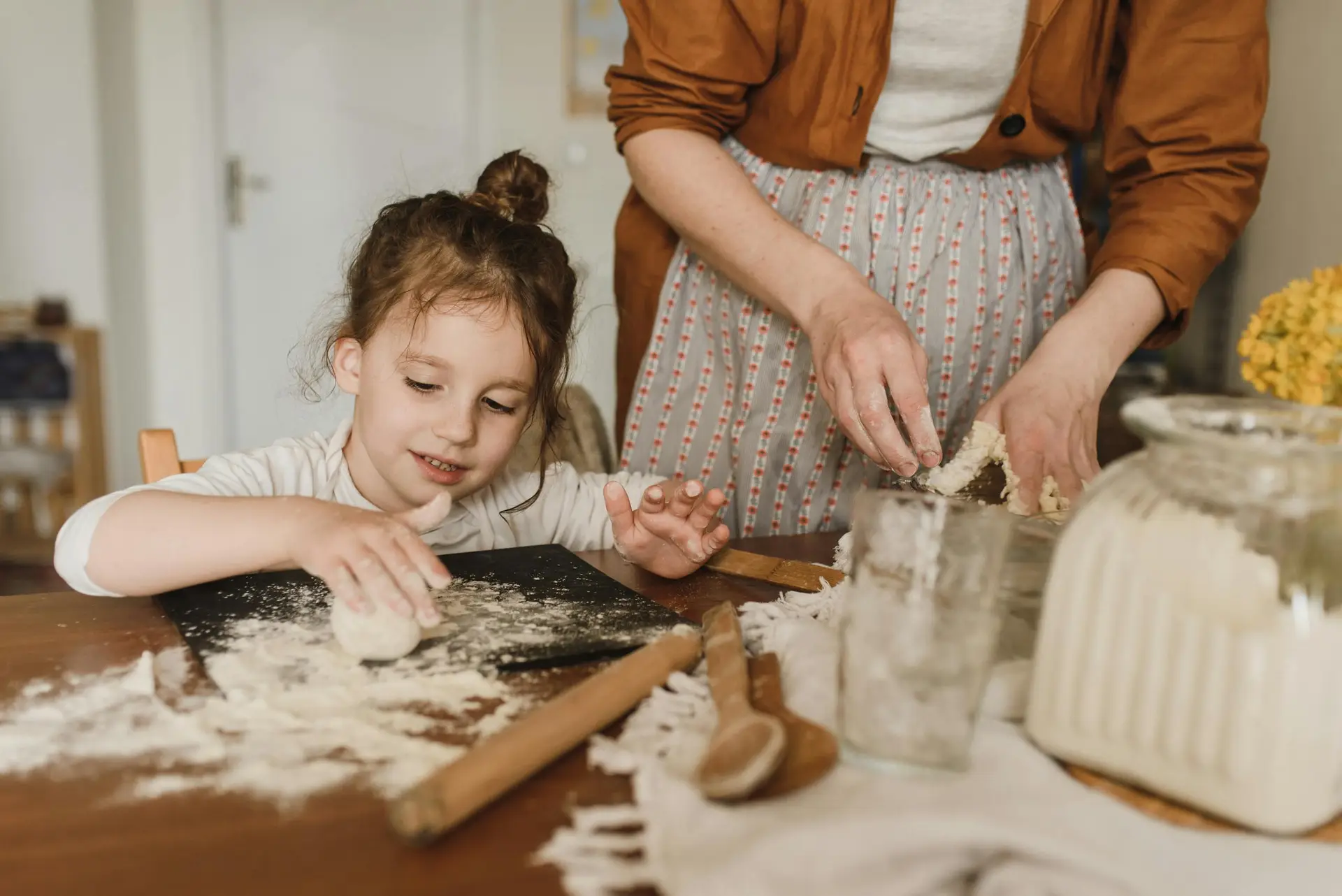
The fix is almost embarrassingly simple. Wash the bowl together. While you’re washing it, talk about what you’re making. Let them dry it. Let them put it on the counter. It’s thirty extra seconds and it means the activity has started — actually started — from the moment you walk into the kitchen.
Small children in particular need to feel that they’re doing the thing, not waiting for the thing to begin. Every task is part of the baking. There are no boring ones if you do them side by side.
The Missing Ingredient
At some point — reliably, inevitably — my father would discover we were out of something. Sugar, usually. Or the right kind of chocolate. He would announce this with genuine surprise every single time, as though the laws of ingredient depletion had never previously applied to him.
That someone was me.
Off I went, alone, while he waited in the kitchen. I didn’t mind exactly, but I was gone for ten minutes, and when I came back the rhythm had broken. He’d moved on to the next stage without me.
Going to the shop for a missing ingredient can actually be one of the better parts of baking together — if you go together. You’re still side by side. You’re talking about what you’re making. The child feels trusted with the errand rather than dispatched so you can get on with it.
The Interesting Part
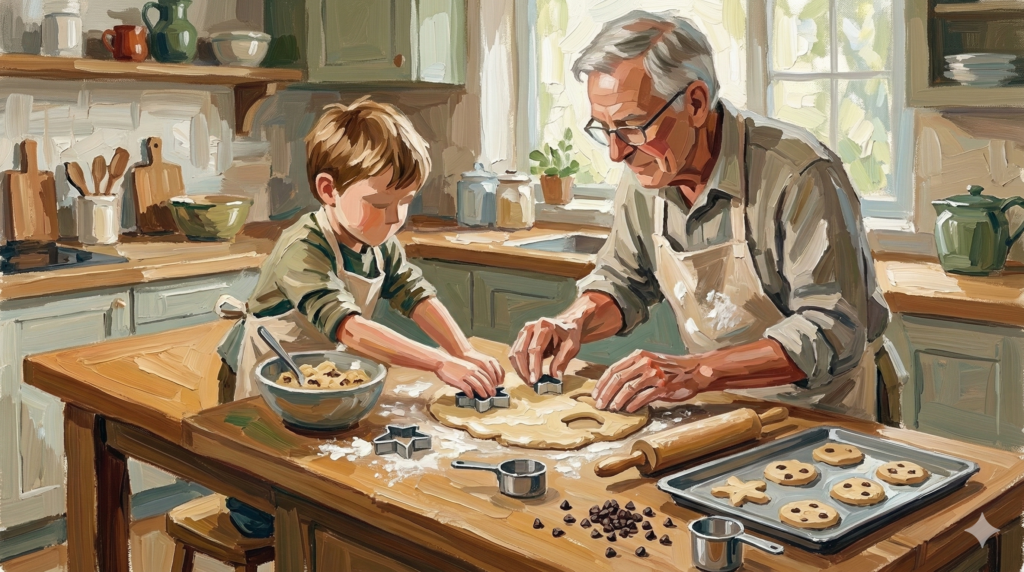
My dad did not share the interesting parts easily. The mixing, the folding, the moment when the batter comes together — these were his. I could watch and admire. He watched me stir with the focused concern of someone monitoring a surgical procedure.
The problem is that the interesting parts are why a child wants to bake. If those go to the grandparent, what’s left for the child is a series of errands in a kitchen that smells good.
Let them do more than you think they can. A three-year-old can pour and stir. A five-year-old can crack an egg (over a separate bowl, with permission to make a mess). An eight-year-old can follow a recipe step by step if you read it out together. A teenager can run the whole thing while you keep them company and hand them things.
Your job is not to produce perfect biscuits. Your job is to be next to them while they produce imperfect ones. The biscuits are the excuse. The standing side by side is the point.
When Something Goes Wrong
Something will go wrong. The oven runs hot. The mixture is too wet. The biscuits spread and merge into one large, slightly embarrassing biscuit.
“These things happen.” He delivered this verdict with the gravity of a man who had investigated thoroughly and reached a fair conclusion.
All jokes aside, what he did right (and he nailed this part) was not panic. He didn’t make the mistake feel catastrophic, which meant I didn’t either. We ate the large biscuit. It was perfectly fine.
When something goes wrong while baking with a grandchild, do it together. Figure out what happened together. Decide what to do about it together. This is more valuable than any recipe: things go wrong, you don’t fall apart, you work it out, you eat it anyway.
A child who watches a grandparent handle a baking failure with good humour has learned something that will outlast the afternoon.
The Washing Up
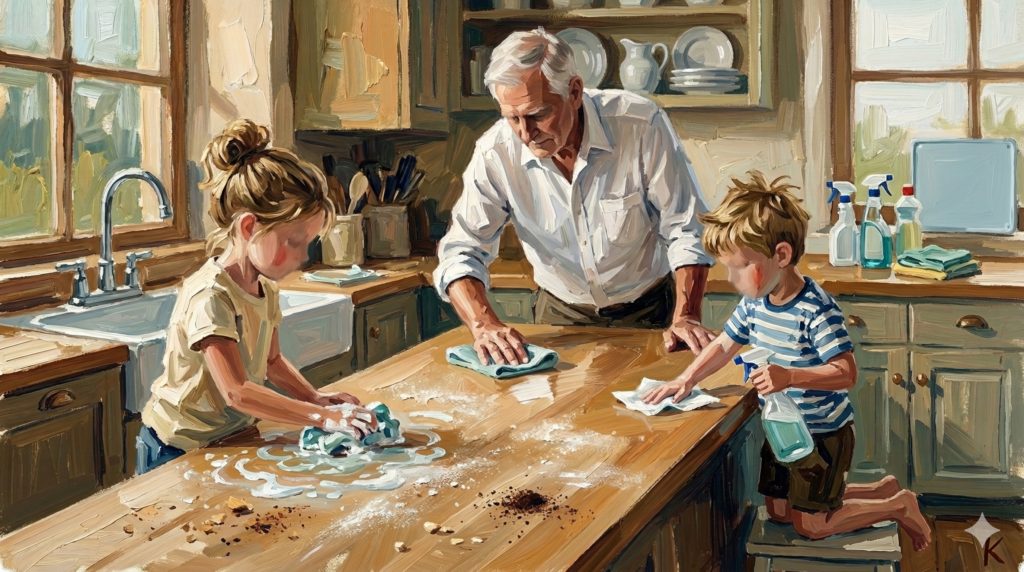
At the end, my father would survey the damage (there was always damage, because enthusiastic and chaotic baking produces a remarkable quantity of washing up) and I would be handed a sponge.
But here is what I’ve come to think: if the whole session has been genuinely together — if I had mixed and poured and tasted and made a mess and been next to my dad for all of it — then the washing up at the end doesn’t feel like being handed the boring task. It feels like the last part of the thing we did together.
Wash up together. Dry together. Put things away together. The kitchen going back to normal is the ending of the story, and endings matter.
The Point of All of It
Your grandchildren are making memories in your kitchen. The baking is the excuse to be there. What they’re actually collecting is time with you, close up, doing something fun.
So wash the bowl together. Go to the shop together. Let them do the interesting parts. When something goes wrong, figure it out together. And when it’s over, wash up together.
That’s all it is. The together is the point.
P.S. I really love my dad. Don’t hold his love for baking against him.
If you’re looking for more ideas of what to do together on an ordinary afternoon, our guide to indoor activities for grandparents and grandchildren has plenty to choose from.
What good grandparenting actually looks like — the things that matter most — is worth reading if you’re thinking about this.