How to Read a Bedtime Story to Your Grandkids Over Video Call
How to read to your grandkids on a video call so they can see the pictures, stay on the call and actually settle down. Where to hold the book, which books work best, and how to make it a weekly habit.
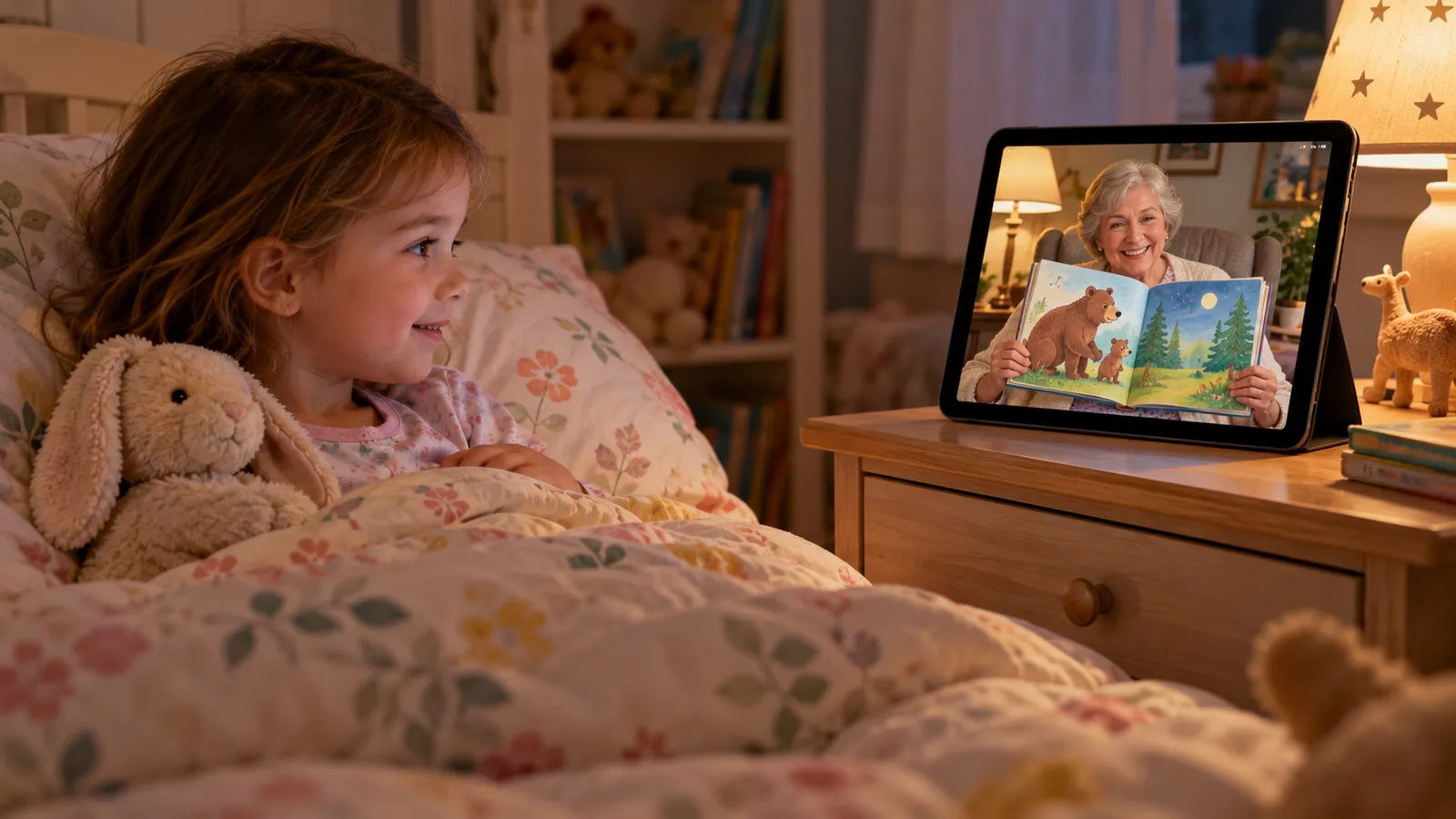
Reading a bedtime story is one of the easiest things to do on a video call, and one of the easiest to get slightly wrong. The book is too close, the pictures are a blur, and the child wanders off halfway through to look for a toy.
A few small changes fix almost all of it. None of them need any special equipment.
Set up before the call
Use a tablet or a laptop if you can. A bigger screen helps the child see the pictures, and you can rest it on a stand or a pile of books instead of holding it.
Put the light in front of you, not behind you. If you sit with your back to a window or a lamp, the camera turns you and the book into a dark shape. A lamp beside the screen works well.
Pick the book before the call. Hunting for a book while a tired four-year-old waits on the other end is a good way to lose them.
Where to hold the book
Hold the book open next to your face, a little to one side, and about an arm’s length from the camera. Your grandchild should be able to see both you and the pictures at the same time.
Before you start, ask, “Can you see the picture?” Then ask again after a page or two. Cameras flip and blur things in ways that are hard to judge from your side, and a child will tell you very honestly what they can see.
If the pictures have small details, hold the page still for a few seconds before you read it. Let them look first.
Read a little slower than feels normal
Video calls have a small delay, and young children need time to look at each picture. Reading slowly feels strange at first, but it gives the story room.
Pause at the end of each page and ask something small. “What do you think happens next?” “Can you find the cat?” These little questions keep a child on the call, and they make the story feel like something you are doing together.
Do the voices. A grandparent who does a very bad wolf voice will be asked for that wolf again and again.
Books that work well on video
Some books are much better on a screen than others. These kinds tend to work best:
- Big, bold pictures. Books like The Very Hungry Caterpillar or Brown Bear, Brown Bear, What Do You See? are easy to see even on a phone.
- Repetition. Children love to join in with a line they know. We’re Going on a Bear Hunt is wonderful for this.
- Lift-the-flap books. Where’s Spot? turns into a game when they shout “Under the bed!” before you lift the flap.
- Interactive books. Press Here by Hervé Tullet asks the reader to tap and shake the book, and it works surprisingly well when the child tells you what to do.
- Short chapter books for older kids. From about six or seven, one chapter a night of something like The Enormous Crocodile or My Father’s Dragon gives them a reason to come back tomorrow.
Long books with small text and detailed pictures are harder. Save those for when you are in the same room.
Two copies of the same book
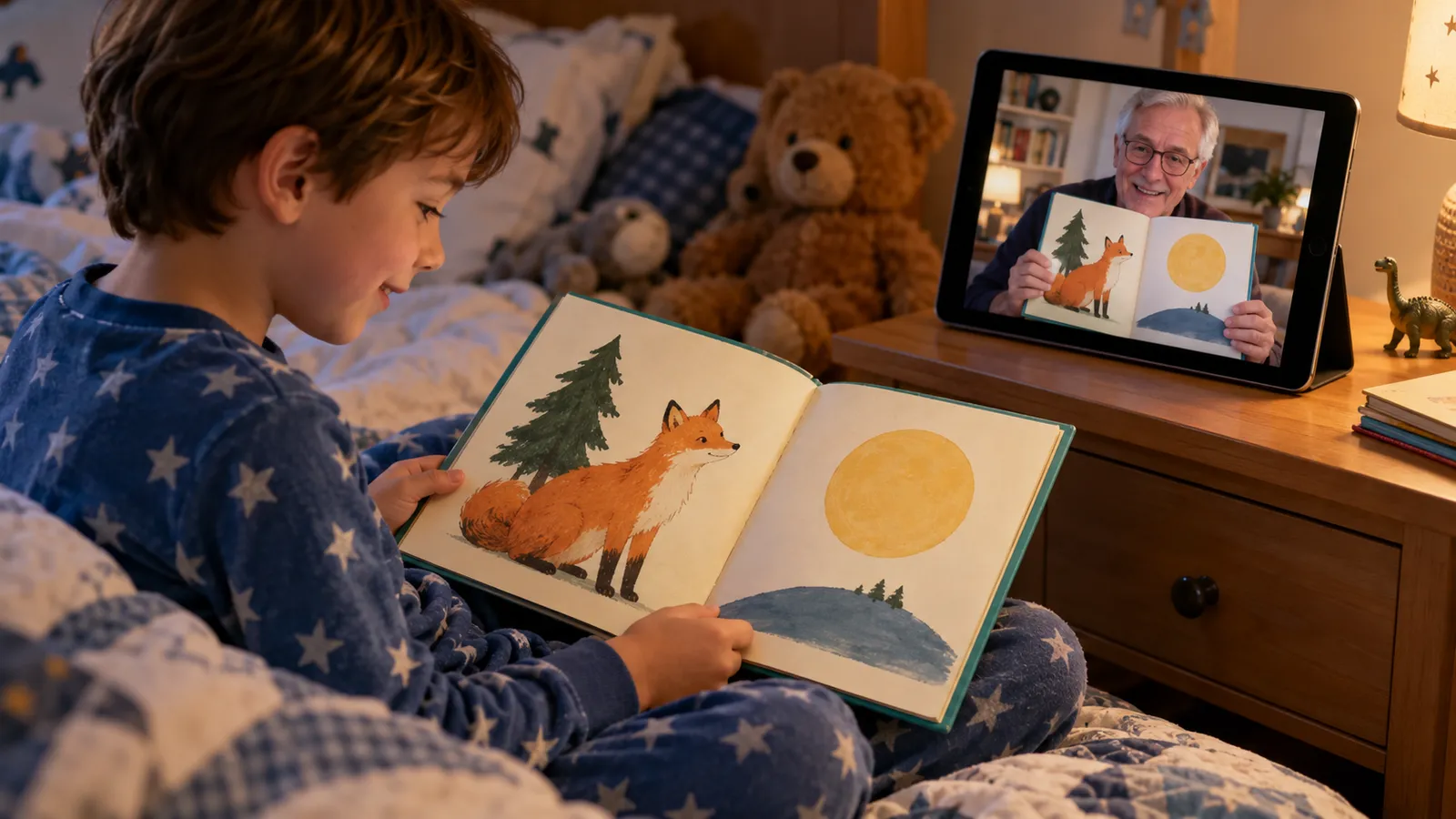
If you want to go one step further, buy two copies of the same book, one for you and one for your grandchild. Second-hand copies are often very cheap.
Your grandchild can follow along in their own copy and turn the pages with you. It also means the book is there in their room on the nights you can’t call, with your voice already attached to it.
Make it a routine
Bedtime stories work best when they happen on the same day at the same time. “Grandpa reads on Tuesdays” is something a child can look forward to, and something parents can plan around.
Talk to the parents first. Bedtime is a busy, delicate hour in most homes, and they know better than anyone when a call would help their child settle and when it would wind them up. Some families prefer a story straight after bath time. Others prefer one in bed with the lights already low.
Keep the call short. One story, a quick goodnight, and done. Ending while a child still wants more is much better than ending when they are falling apart.
If they wander off
Sometimes a child gets up halfway through the story to find a toy, or decides the story is about a different animal now. That is normal, especially under five.
Keep reading in a calm voice. More often than not, they come back to see what happened. If they don’t, finish the page, say goodnight, and try again next week. A short story that ends happily is still a good call.
When you can’t call at bedtime
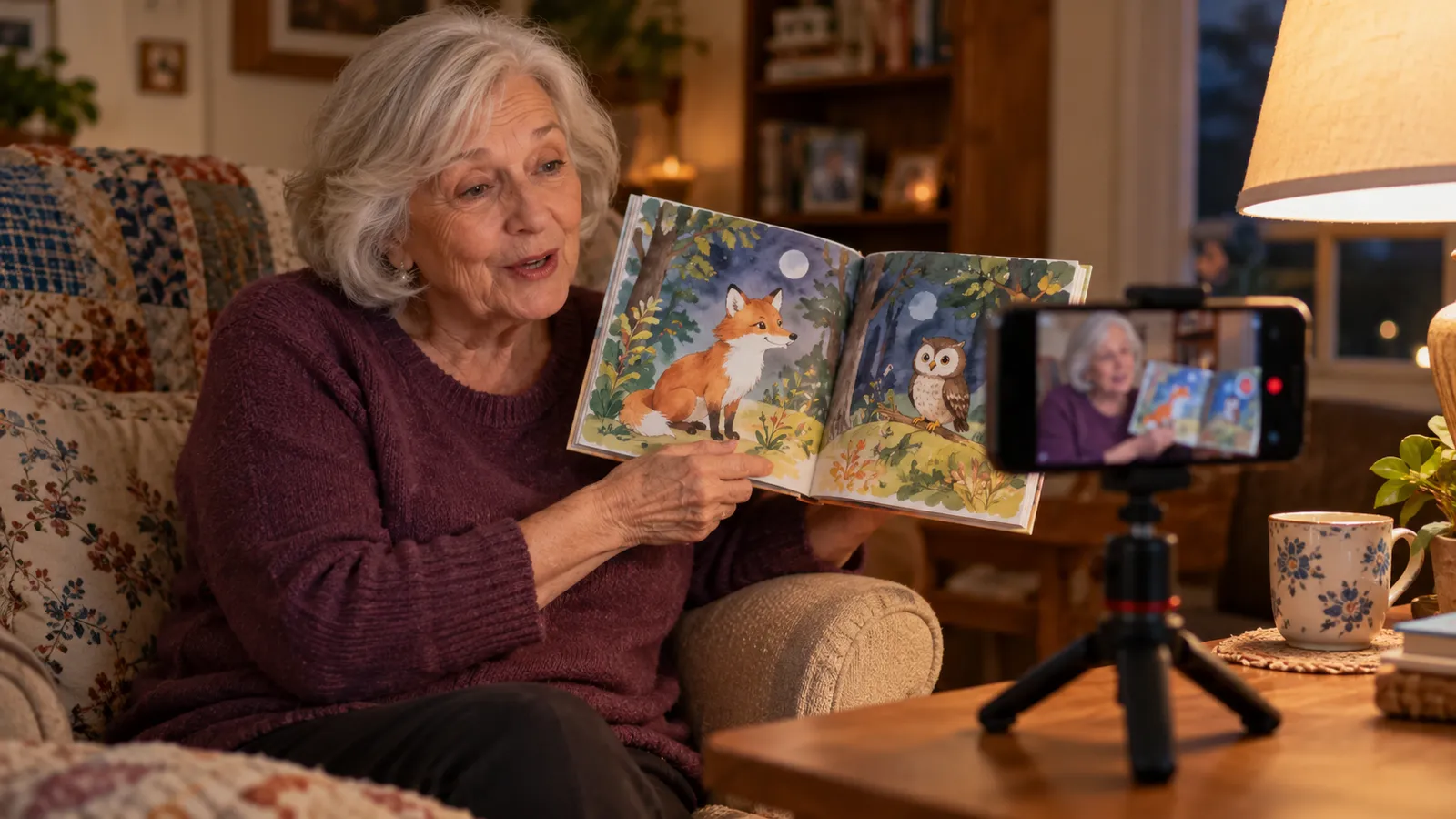
If time zones or work schedules make a live call difficult, record yourself reading instead. Prop up your phone, hold the book next to your face exactly as you would on a call, and read the whole story through. Send the video to the parents so they can play it at bedtime.
It is not quite the same as reading live, but a child can watch it as many times as they like. Many of them do.
If you want something to do on the nights when you are not reading, our two calm drawing games are also good for the end of the day.
Our free Video Call Play Pack has a Story Night chart, with a space for a sticker after every story, and a page for writing down the books you read together.
Get the free Video Call Play Pack
Which book did you love reading to your own children, and have you read it to your grandkids yet?