Fun Indoor Activities for Grandparents and Grandchildren on Rainy Days
The rain starts. The park is out. The garden is out. The child is looking at you with the particular expression that means they expect you to produce entertainment from thin air, and the only plan you had was “go outside.”
Every grandparent has been here. The good news is that some of the best times with grandchildren happen indoors, precisely because there’s nothing else to do. Without a schedule or a destination, you end up doing things together — real things, the kind that become memories. The trick is having a few ideas ready before the boredom sets in.
These are activities that actually work. They’ve been tested by grandparents with real grandchildren in real living rooms, and they’re sorted roughly by age — though plenty of them stretch across age groups if you adjust the expectations.
Baking Together
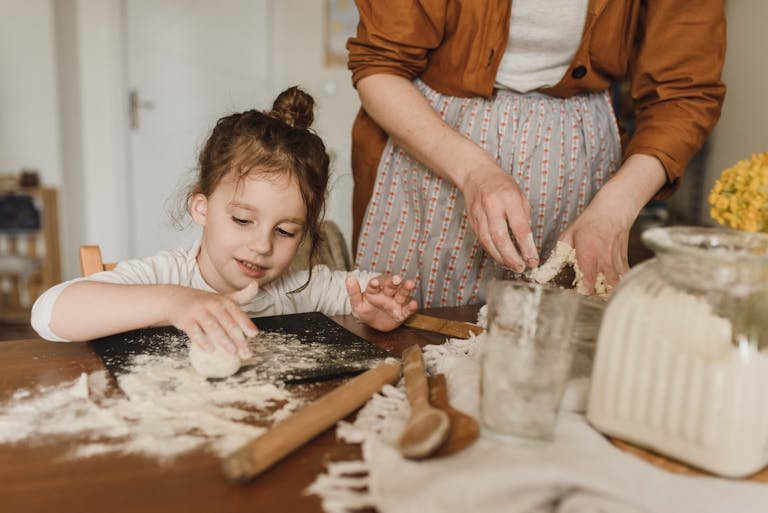
Baking is the activity that grandparents and grandchildren were designed for. It’s messy, it’s collaborative, it produces something edible, and it fills the house with a smell that makes everything feel right.
For younger children (age three and up), keep it simple. Fairy cakes, biscuits cut into shapes, or rice crispy treats. The process matters more than the result — measuring, stirring, pouring, licking the spoon. Accept that there will be flour on the floor. Accept that the biscuits will be uneven. The child won’t care, and neither should you.
For older children, raise the ambition. Bread is surprisingly satisfying to make with a child — kneading dough is physical and tactile in a way that holds attention. Pizza dough works even better, because they get to choose their own toppings. Brownies are almost impossible to get wrong and taste impressive regardless.
The unspoken value of baking is the conversation that happens alongside it. Something about having your hands busy makes children talk more freely. You’ll learn things about their week, their friends, their worries — things that don’t come out during a direct question over the dinner table.
Building a Den
Den-building is one of those activities that takes five minutes to set up and can absorb an hour. All you need are sofa cushions, blankets, a couple of chairs, and possibly a torch.
Drape blankets between chairs and the sofa. Use cushions for walls. The child will have strong opinions about the architecture — let them lead. Once the den is built, the possibilities expand: reading stories inside it by torchlight, having a picnic on the floor, pretending it’s a spaceship or a castle or a veterinary surgery.
This works best for children aged roughly three to eight. After that, they may consider themselves too old for dens, though many will happily participate if an adult takes it seriously enough.
Arts and Crafts
The range here is enormous, so match the activity to the child’s age and your tolerance for mess.
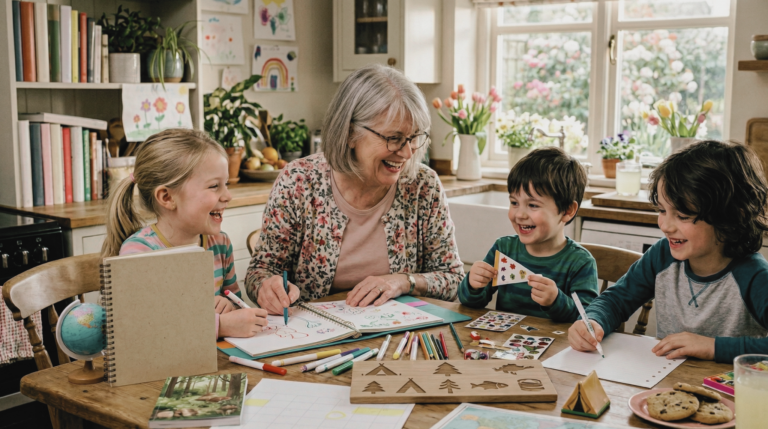
Painting and drawing. Watercolours are less chaotic than poster paint but still satisfying. Give children a subject — paint your favourite animal, draw Grandma’s garden, make a picture of your bedroom — and they’ll settle into it. For very young children, finger painting on large sheets of paper (taped to the table or floor) is absorbing and requires no skill.
Collage. Old magazines, scissors, glue, and a large piece of card. Ask them to make a picture of their dream holiday, or their favourite things, or what they want to be when they grow up. Collage works for a wider age range than most crafts because the concept scales — a four-year-old will stick random pictures on paper and be thrilled; a ten-year-old might create something genuinely artistic.
Making cards or letters. If there’s a birthday or occasion coming up, making the card together is an activity and a gift in one. Even without an occasion, writing a letter to someone — a friend, a cousin, a parent at work — feels special to a child, particularly if you walk to the postbox together to send it.
Modelling with clay or playdough. Playdough for the young ones, air-drying clay for older children. Making something three-dimensional is a different kind of creative challenge, and the results can be painted once dry. A small hand-print in clay, dried and painted, makes a keepsake that grandparents have been treasuring for generations.

Board Games and Card Games
Games are one of the few activities that work across the entire age range, from three to fifteen, and they’re one of the best ways to spend time with grandchildren because the interaction is built in. You’re not just in the same room — you’re competing, collaborating, laughing, and occasionally arguing about the rules.
For younger children (ages 3–6): Orchard Toys makes excellent games for this age — simple rules, short playing time, bright and appealing. Snakes and Ladders, Pairs (memory matching games), and Hungry Hippos are also reliable. At this age, the child is learning to take turns and to cope with not winning, which are more valuable skills than any game teaches directly.
For ages 6–10: Monopoly Junior, Connect 4, Guess Who, and Cluedo Junior are all good. Uno is a card game that works brilliantly across ages and is simple enough for a six-year-old to play competitively. Dobble is fast, funny, and fits in a pocket.
For older children and teenagers: Ticket to Ride, Catan (the simplified version for younger players, the full version for teens), and Scrabble all provide genuine intellectual challenge. Card games like Rummy and Cheat are excellent — the rules are simple, the games are quick, and there’s a social dynamic that teenagers particularly enjoy.
The grandparent advantage: You almost certainly know card games that the child has never heard of. Teach them. Snap, Go Fish, and Beggar My Neighbour for young ones. Rummy, Pontoon, and Cribbage for older children. A pack of cards costs almost nothing and provides more hours of entertainment than most toys.
Cooking a Meal Together
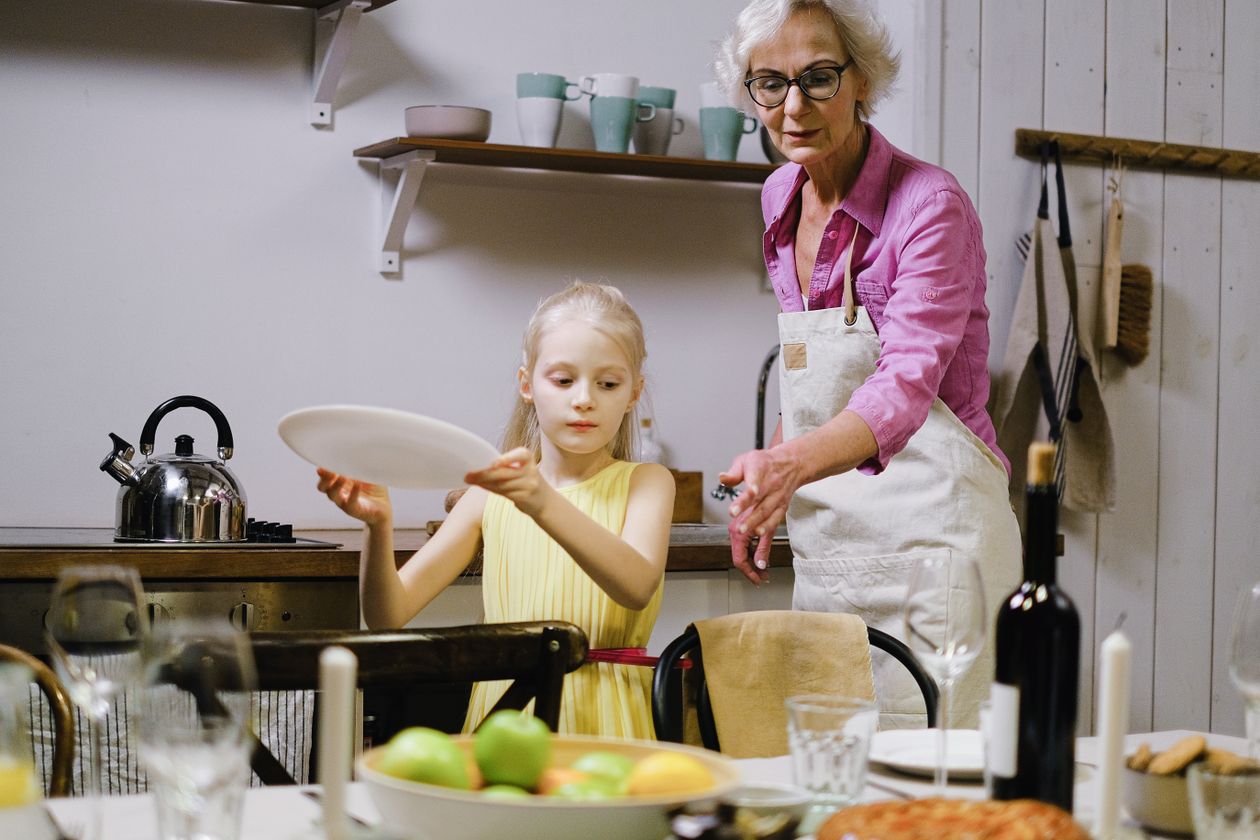
Different from baking, and worth its own mention. Cooking lunch or dinner together is an activity that has a clear purpose, a satisfying endpoint, and teaches skills that will actually be useful later in life.
Let the child help with age-appropriate tasks. A three-year-old can wash vegetables and tear lettuce. A six-year-old can stir, measure, and arrange things on a plate. A ten-year-old can chop (with supervision), follow a recipe, and manage timing. A teenager can essentially cook the whole thing while you keep them company.
Simple recipes work best: pasta with a sauce made from scratch, jacket potatoes with fillings, homemade soup, a fry-up. The meal doesn’t need to be ambitious. The value is in doing it together and sitting down to eat something you both made.
Puzzles
Jigsaw puzzles are a quietly brilliant rainy-day activity. They’re collaborative without being competitive, they suit a wide range of ages, and they can be returned to over the course of a day (or several days, if the puzzle is large enough).
For young children, chunky wooden puzzles with 20–50 pieces work well. For school-age children, 100–300 pieces is a good range. For teenagers and adults, 500–1000 pieces provides a genuine challenge that can become a shared project across multiple visits.
Keep a puzzle going on a table or a puzzle board. The child can return to it whenever they want, and there’s something deeply satisfying about finding a piece that’s been eluding you for hours.
Storytelling and Reading
Reading aloud to a grandchild is one of the simplest and most powerful things you can do together. It costs nothing, requires no preparation, and creates a specific kind of closeness that’s hard to replicate any other way.
For younger children, picture books are ideal. Read with expression. Do the voices. Let them turn the pages and point at things. If they want the same book three times in a row, read it three times. Repetition is how young children process stories — and they’re not bored, even if you are.
For older children, reading a chapter book together — a few chapters per visit — creates anticipation and gives you a shared story to discuss. The Famous Five, Harry Potter, Roald Dahl, anything by Jacqueline Wilson — the book matters less than the ritual of reading it together.
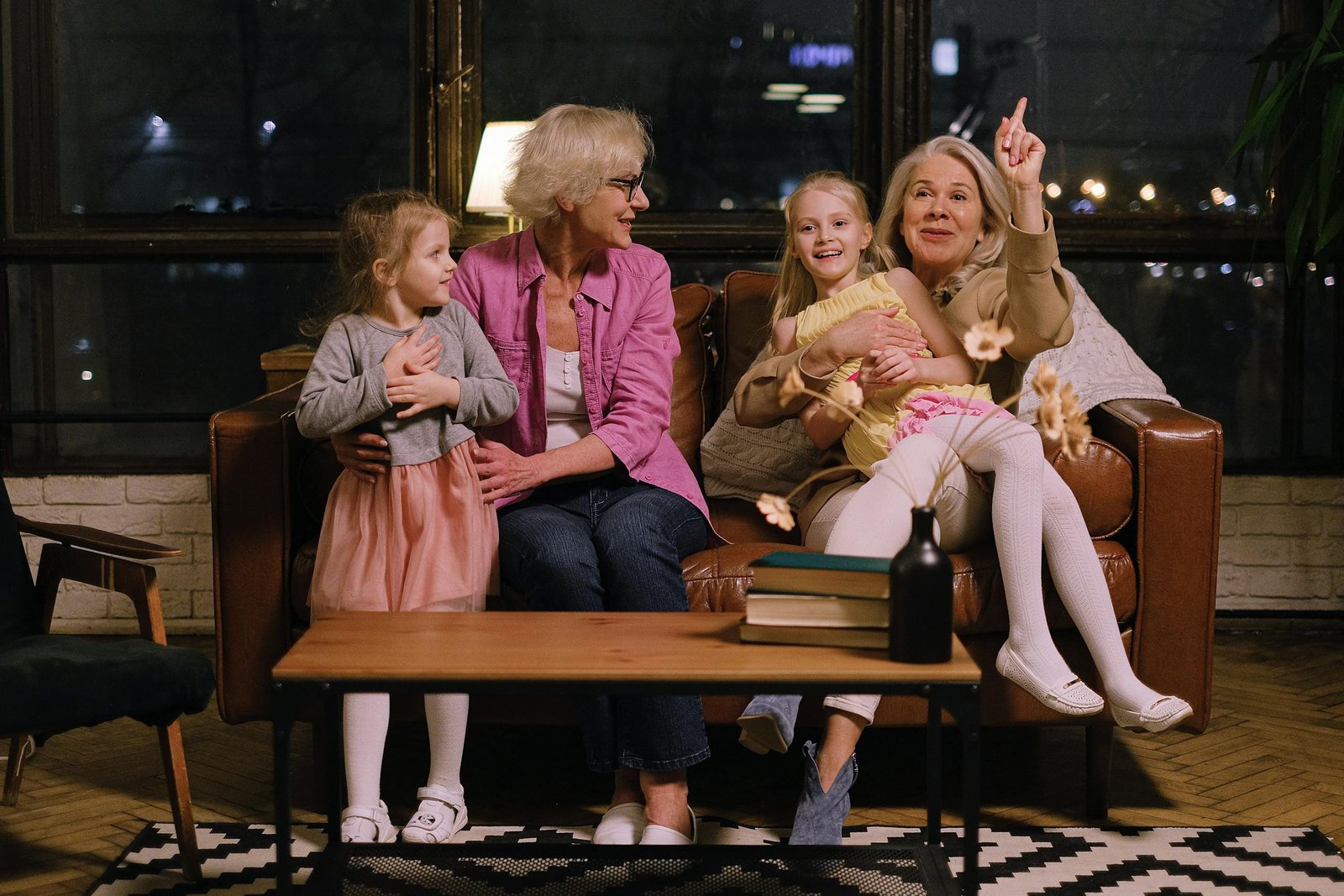
And don’t overlook storytelling without a book. Children love hearing stories about your life — what school was like, what you did as a child, the silliest thing that ever happened to you. These stories cost nothing and are, to a child, utterly fascinating.

Gardening Indoors
Even when the weather rules out the garden, you can bring a bit of gardening inside. Planting seeds in pots on the windowsill is quick, easy, and gives the child something to check on during future visits.
Cress grows fast enough to hold a young child’s attention — you’ll see sprouts within a couple of days. Sunflower seeds planted in small pots can be taken home and transferred to the garden later. Herbs like basil and mint are satisfying to grow and can eventually be used in cooking together.
For a longer-term project, a small terrarium in a glass jar makes a self-contained garden that a child can watch develop over weeks. There are simple kits available, or you can make one from scratch with soil, small plants, moss, and pebbles.
When Energy Is Low
Not every activity needs to be hands-on. Some of the best rainy-day moments are quiet ones.
Watching a film together. Choose something you both enjoy — or something you loved as a child that they haven’t seen yet. Popcorn helps. Commentary is welcome.
Sorting through old photos. If you have physical photo albums from your own childhood or from when their parent was small, going through them together is endlessly entertaining for children. They love seeing their parents as babies. They love seeing you as a young person. The photos prompt stories, and the stories prompt questions, and before you know it an hour has passed.
Teaching them something. Knitting, sewing a button, playing a simple tune on a piano, shuffling cards properly, writing in cursive — small skills that you know and they don’t. The teaching is the activity, and the child walks away knowing something they didn’t before.
The Real Point
The activities in this article are suggestions, not requirements. The truth about spending time with grandchildren indoors is that the specific activity matters far less than the fact that you’re doing it together, without hurry, without a screen dominating the room, and without anyone checking the time.
A rainy afternoon with a grandparent is, for a child, one of those unremarkable experiences that turns out to be deeply formative. They won’t remember what you baked. They’ll remember that you baked together, and that your kitchen smelled like butter, and that you let them lick the bowl.
Baking together is one of the best indoor activities going — we have a whole piece on how not to bake with your grandchildren, which is funnier and more useful than it sounds. If you’re thinking about what makes the time you spend together matter most, our piece on how to be a good grandparent is worth reading alongside this.